
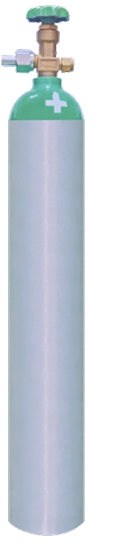
Acetylene Cylinder
Acetylene cylinderThe acetylene cylinder is one of the most specialized types of industrial cylinder and differs significantly from many other industrial gas cylinders in structure, design and safety requirements. Because of its special physical properties, acetylene cannot be stored in an ordinary tank like many compressed gases; acetylene cylinders therefore have a special structure that allows this product to be stored safely and reliably.
Supply options: purchase, refill or exchange
Cylinder with gas, ready for delivery
You have a 12 lb cylinder and only need gas
📦
🔄
Without gas, to be filled by the buyer
Specifications Table
| Internal structure | Working pressure | Test pressure | Hydrostatic test pressure | Weight | Diameter | Height | Valve type | Supply condition | Refillable | Country of manufacture |
|---|---|---|---|---|---|---|---|---|---|---|
| Porous mass saturated with acetone or DMF solvent | 250 psi, about 17 bar at 12°C | 250 bar | Above working pressure, according to the manufacturing standard | 59kg | 219mm | 1350mm | Special valve with left-hand thread | New and sealed | Yes | China |
Grade and purity of the gas in the cylinder
Acetylene cylinders are available in industrial grades and, if needed, higher grades (chemical synthesis, laboratory, research).
For the grades and purity levels, see the buy acetylene gas ↗ page.
Storage and usage safety tips
- An acetylene cylinder must always be stored, transported and used upright.
- A safe distance must be kept from oxygen cylinders and other oxidizing gases.
- After filling, the cylinder must stand upright for at least 24 hours so that the solvent and gas reach equilibrium.
- Never use a flame to look for leaks; use only a standard foaming solution.
- Cylinders without a valid hydrostatic test date must not be used or refilled.
Acetylene cylinder buying guide
New vs. used: a new cylinder costs more but lasts longer and is better for long-term industrial use. A used cylinder is cheaper but needs careful checking of its hydrostatic test and body condition, so it should only be bought from licensed sellers.
Buying vs. renting: buying a cylinder costs more up front but lets you refill at any licensed center and save in the long run — a good choice for continuous use. Renting is more cost-effective for temporary projects and small businesses.
Checks before buying: don’t forget the manufacturing date and the date of the last hydrostatic test, the condition of the body/valve/cap, and asking for a standard certificate.
Acetylene cylinder filling process
Unlike compressed gas cylinders, filling acetylene combines controlled injection of gas into a porous mass and solvent, and must only be done by officially licensed centers:
1. Initial inspection: checking the body, valve, fusible plug and hydrostatic test date
2. Weighing: determining the exact amount of gas that can be filled
3. Solvent injection: if needed, replacing evaporated acetone
4. Filling with acetylene: gradual injection of gas under controlled pressure
5. Final weighing: ensuring the gas amount exactly matches the permitted capacity
6. Leak test: checking the valve and body with foaming solution or a detector
Because of acetylene’s special properties, the inside of the cylinder must be porous and contain a special solvent.
No. Acetylene cylinders must be stored and moved upright to prevent the internal solvent from shifting and causing problems during use.
If the cylinder has been transported horizontally, it should stand upright for a few hours before use so that the internal solvent can settle.
The service life of a cylinder depends on storage conditions, frequency of use and the results of periodic inspections. If it passes the technical and hydrostatic tests, a cylinder can be used for many years.
Acetylene has special physical properties, and using standard regulators made for this gas is essential to control pressure, increase safety and prevent damage to equipment.